
 por
por 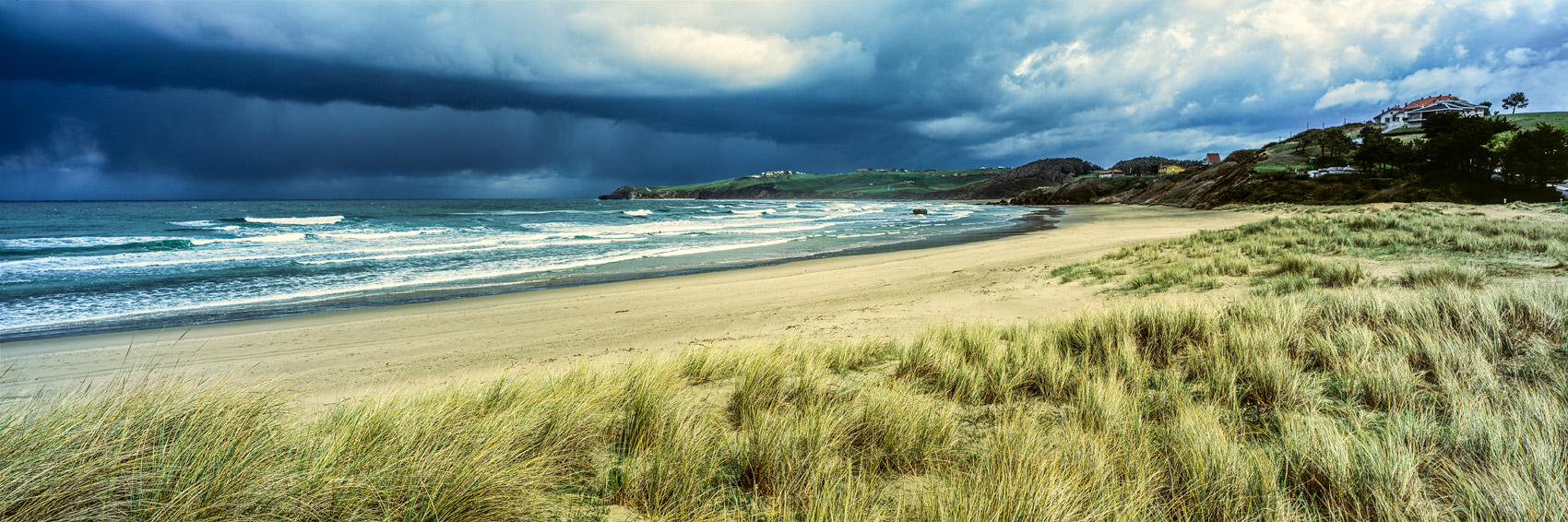
Here are thoughts I wrote down in 2013 when I was learning analog panoramic photography.
“I have been taking 617 slide pictures for a year now. Medium format landscape photography is a deeply gratifying process. It is the result of a lot of research and work. I sometimes feel lucky to be given a picture by Mother Nature. Nonetheless you really MAKE a picture. You never are on a good location by chance. You deserve to live those moments you have chosen and get a good picture of them.
The panoramic format is a real challenge; that’s why I just love it. Subjects are really hard to find, taking a picture with this camera is like a celebration of the landscape. You need to give the best of yourself for not taking pictures at all, as well to take pictures of the right place, only at the right moment.
“You never are on a good location by chance.”
With such a wide angle, any element, line, detail, or part of the picture which isn’t in harmony with the whole will inevitably distract the viewer’s attention and ruin the composition. Wanting to show too much and drowning the subject into the whole is another temptation and difficulty of panoramic. Finding simple, wide but harmonious landscapes is much harder in panoramic than with any other format. You think twice before setting your tripod up. And it doesn’t have to do with film costs. The thing is that when I have found a great subject, I know it by pure intuition; I just can’t stop watching an intriguing scenery which simply screams at me.
” When I have found a great subject, I know it by pure intuition.”
The right composition comes more or less easily, but I know when it is there in front of me and have to find it. I take a lot of pleasure in doing small adjustments on composition, explore different solutions and get as close as possible to perfection. It can take me up to two or three hours before I find the right angle, by titling the lens down, getting low close to the ground, choose a side angle according to the light source orientation, and finally set my gear up. If the light doesn’t give me that much time, I can choose a composition in a matter of a few minutes, shoot without measuring the light and get great results. It comes with experience. The only think is that this bulky gear doesn’t allow for pure improvisation; otherwise, even if you get to record the light you are very likely to miss the other ingredient, composition, which is the most important pillar of the panoramic format in a 3 to 1 ratio.
” Getting a deep feeling of how the light is progressively changing, shaping and putting everything into its place.”
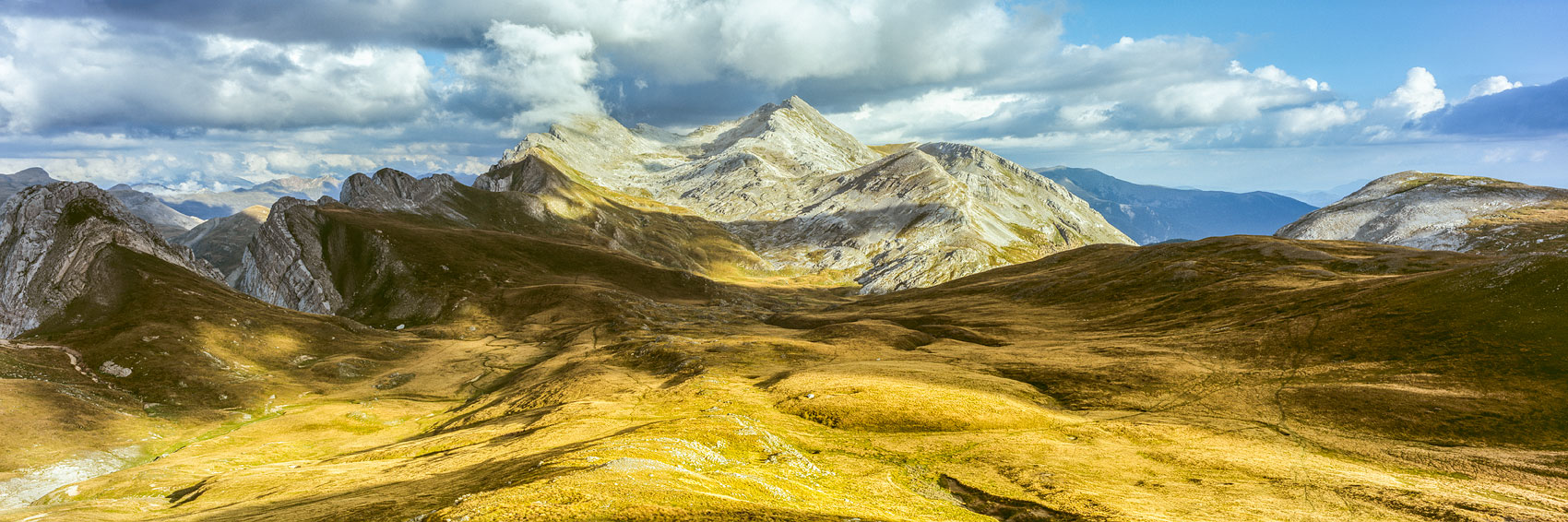
Of course I am inevitably influenced by other panoramic photographers’ work. On one hand, I dream about finding the perfect scenery, pushed by a desire of solitude. For that reason, I have been looking for remote locations, like natural parks, especially for mountainous sceneries. I look for the best light and can’t stand taking a photography bathed in normal light though I do have some in my portfolio. When you are in front of a landscape, you know by intuition if the subject is really worth it and if it is going to make a good picture. Not only by visualizing how it will appear on film, but by getting a deep feeling of how the light is progressively changing, shaping and putting everything into its place. I can wait for several hours before taking one shot, especially if I am in the mountains. In the last hour of the photographic window I choose for my subject, my attention is drawn into the landscape. I feel one with the place and assess if it is the right moment to press the shutter or not. I can take a couple of shots if I feel such valley in the shade will be too dark for my slide if I wait too much, even if it isn’t exactly the light I was wanting for this particular shot. Mountain photography is hard for that matter. You need to explore a lot the place under different seasons, and spend a lot of time.
They say pictures speak for themselves. I don’t claim to be the best panoramic landscape photographer ever. But after a year of learning, I have realized that looking for ideal locations all the time is everything but a sincere process. Because the world isn’t a postcard. I don’t think the beauty is in the viewer’s eye. Some places are simply more photogenic than others and will make better and more beautiful pictures, that’s a fact. Same thing with portraits. Actually beauty should not be the photographer’s main preoccupation.
I feel more and more that I should try to record places on film as they are, without the desire of making them looking good and beautiful. Black and white photography helps being more creative and give the feel of the place. It is less distractive that color probably.
If I feel disappointed when looking at one of my slide, it is not because I am disappointed by the subject , it is because I cannot see myself in the picture. For me a good slide should revive instantaneously the feelings I had that particular day. Whether I transposed some feelings which already existed in me prior to that day, or whether they arose in me when I viewed the landscape, each time I press the shutter, then the photo keeps a trace of me.”
 fotomonte.com