
 por
por 
The image output is the support you choose to showcase your final image on. It can range from putting it on the web (digital support), getting it printed on a mug to having it beautifully displayed on Plexiglas (printed support). Both types have been reinforcing each other in the last twenty years.
On the one hand, because taking pictures has always been linked with the possibility of simply sharing our experiences with others, we primarily share our pictures online thanks to social networks. Some of you will remember the old times when we used to show our holiday printed pictures to relatives or friends and have them bored after ten minutes. Now we simply have a browse and decide to like them or not by a click, alone in front of our screen.
“We can now edit our pictures ourselves, control the whole photographic process from the input to the output more easily and unleash the artist within.”
On the other hand, with the continuous improvement of inkjet printers since the 1970’s and the advent of digital technology (cameras, computers and smartphones), we’ve seen flourishing lots of online labs and printing options which have empowered us. We can now edit our pictures ourselves, control the whole photographic process from the input to the output more easily and unleash the artist within. When Ansel Adams’ book The Print was published in 1950, he considered it as the ultimate goal of a landscape photographer. The whole photographic process, at all of its stages, from taking the picture to developing the negative, was technically influenced by it. Nowadays, even some of the best photographers don’t choose the print as the final output for their images though. Nonetheless, if you consider doing photography artistically, I personally think that printing is by far the best way to convey your vision completely. Having an image printed is doing justice to it. Said that, everyone is free to consider what she or he prefers.
While I explain why I love so much shooting film in 2019 in another post, here I want to describe my favourite display support and how I got there. I shoot panoramas mostly with a bulky film camera, the FUJI GX 617, and each shot is a whole adventure. This exceptional format of a 3:1 ratio is hard to edit though. Magazines usually have to crop your picture in order to publish it. It you make a book, you have to find a way for your picture of not being split on two pages. If the case, it must be with a special bookbinding. After making prints, keeping them in art photo albums, which aren’t bigger than 45 cm long on the market, limits you in terms of size. So where could I keep my bigger prints ? If I made several mounted or framed prints just for myself, where would I keep them ?
“I finally decided that the best solution was to build my own archival box and protect it with a custom made case too.”
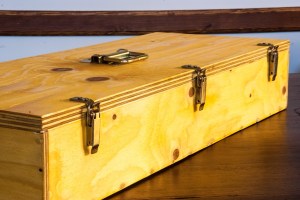
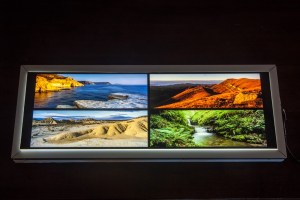
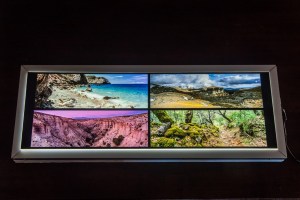
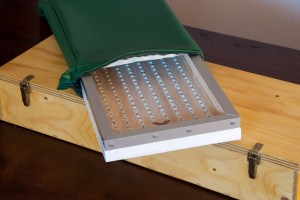
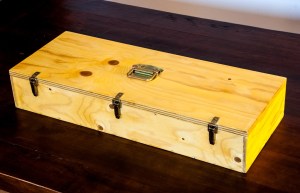
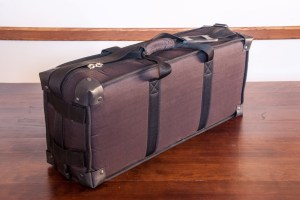
Panoramic pictures should be at least 20 x 60 cm to allow the viewer to enter the scene. That’s the conclusion I got to, even though 30 x 90 cm is better for exhibitions. After reviewing all the alternatives, I finally decided that the best solution was to build my own archival box and protect it with a custom made case too. I made a couple of prints, but quickly realized that a hard support was better to have them flat for good display and easier to manipulate. I could put a dozen of 4 mm thick prints in my new box. I just had to choose the best support for them.
If you read my story, you’ll understand how impressive medium format slides can be. If you never had the opportunity to see some, it’s really hard to figure out the way they render reality. They convey textures and light in such a natural and smooth manner that you have the impression of witnessing the scene again. When thinking about which final output I wanted for my images, my first consideration was to let a mark on the viewer as the original scene had on me. And what a better way than creating a massive slide with the Durst Lambda process on Translucent FujiTrans Paper ! Basically a digital enlarger exposes a light sensitive paper to red, green and blue laser beams caming out of tubes. Then the paper can be developed traditionally by the chromogenic print process. Because a panoramic slide have so much resolution and contain so many details, you want the final print to be faithful to them. That’s why I choose the Translucent FujiTrans, a transparent paper with a Dmax of 3.2. As you can expect, the results are superb.
Now I can really tell my photographic story of the last fews years, mixing harmoniously different Spanish landscapes and colours on a single print or layering it on Plexiglas. I can take this box everywhere with me and don’t feel that frustration of not being able to showcase my work anymore, when I am travelling and meeting new people. Opening this box is inviting you to enter my inner world, my mind and my imagination. You can review in a matter of minutes what actually took me years to conceive in my mind and then actually shape.
And what about you ? What do you want to do with you pictures ? How do you want to express your vision ? What your final image output ? What’s your final world outlook ?
 fotomonte.com