
 por
por “Over the years, I have developed a method to avoid thinking in halves, thirds, quarters, or the golden mean as I compose the landscape: I always begin by spontaneously balancing the features I have chosen by intuition.”
Galen Rowell, Mountain Light.
For any photographer looking to improve his skills and changing his approach to landscape photography, I would strongly recommend reading Moutain Light, by Galen Rowell, a famous american photographer and adventurer of the 1980’s and 1990’s. It took a lot of time and research for Galen to write that book, because he went deep inside of his experience and soul, to find sincere and valuable information to deliver.
If you are stepping across many difficulties in your learning process and are disappointed by the results you achieve, don’t worry and enjoy the photographic journey. Good landscape pictures don’t come easily when you start photography, because we tend to make things more complicated than they actually are.
“As I hope for a lucky moment while I am carrying a camera on an outdoor adventure, I often have the feeling that there is nothing in the world I would rather be doing and no other place I would rather be.”, Galen Rowell, Mountain Light.
Two important things I learned is that you need time and to trust your intuition. I gave myself all the time I needed to achieve what I wanted to do. It never ends and my life has finally turned around my next photographic trip. I can see potential pictures everywhere. That’s the way I look at the world everyday. I follow my intuition in every aspect of my photography: from looking for new places, adjusting my composition, looking at the scene from different points of view, etc. Nonetheless you have to find a balance between setting high expectations to yourself and actually making the most of what you have. It depends on the kind of subjects and pictures you want to make. Not everyone can afford expensive trips to exotic locations and not everyone can climb to the top of a snowy summit.
Because I did my homework a few years ago, I will let you think about a bunch of quotes from Galen’s book that seemed important to me :
Personal style, technique and our Self
“When we are deeply moved by a photograph of a landscape, we are usually reacting to what I call the “selective vision” of the photographer rather than the fidelity of the scene itself.”
“Photographs can lie as surely as words, and just as writing, making photographs implies that the photographer understands what his photograph says. My rule of thumb is to hold back from making an exposure unless it directly involves me intelectually or emotionally, or in both ways.”
“The roots of style are to be found in personal vision rather that in technique.”
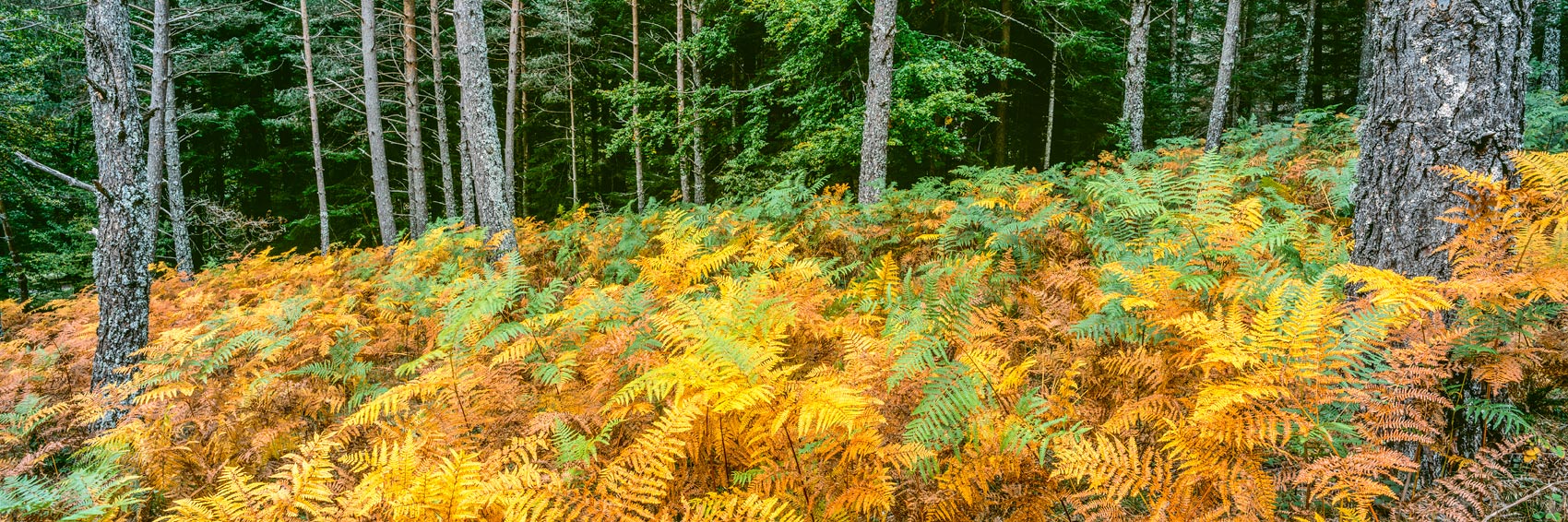
“At the heart of all photography is an urge to express our deepest personal feelings, to reveal our inner, hidden selves, to unlock the artist. Those of us who become photographers are never satisfied with just looking at someone else’s expression of something that is dear to us. We must produce our own images, instead of buying postcards or photo books. We seek to make our own statement of individuality.“
Further in the book, Galen quotes the famous humanist photographer Henri Cartier-Bresson:
” For Cartier-Bresson, “photography is the simultaneaous recognition, in a fraction of second, of the significance of an event, as well of precise organization of forms which give that event its proper expression. Through the act of living the discovery of oneself is made concurrently with the discover of the world around us which can mold us, but which can also be affected by us. A balance must be established between these two worlds… both these worlds come from a single one. And it is in this world that we must comunicate.”
Making good photographs
“Three separate elements must come together in the creation of such a (good) photograph: technical proficiency, fine light and an identifiable personal vision.”
“Photography succeeds not when the original vision is created photographically, but when the landscape photograph is able to evoke or re-create a similar vision in the mind of each viewer. If the re-creation is not understood or not relevant or not powerful enough, the image fails. But if the special unity of composition found by the photographer triggers strong emotions, the image as a chance of success.”
“The best photographs speak for themselves. Attempts to analyse their meaning invariably detract from the special quality that is beyond words in the first place.“
 fotomonte.com